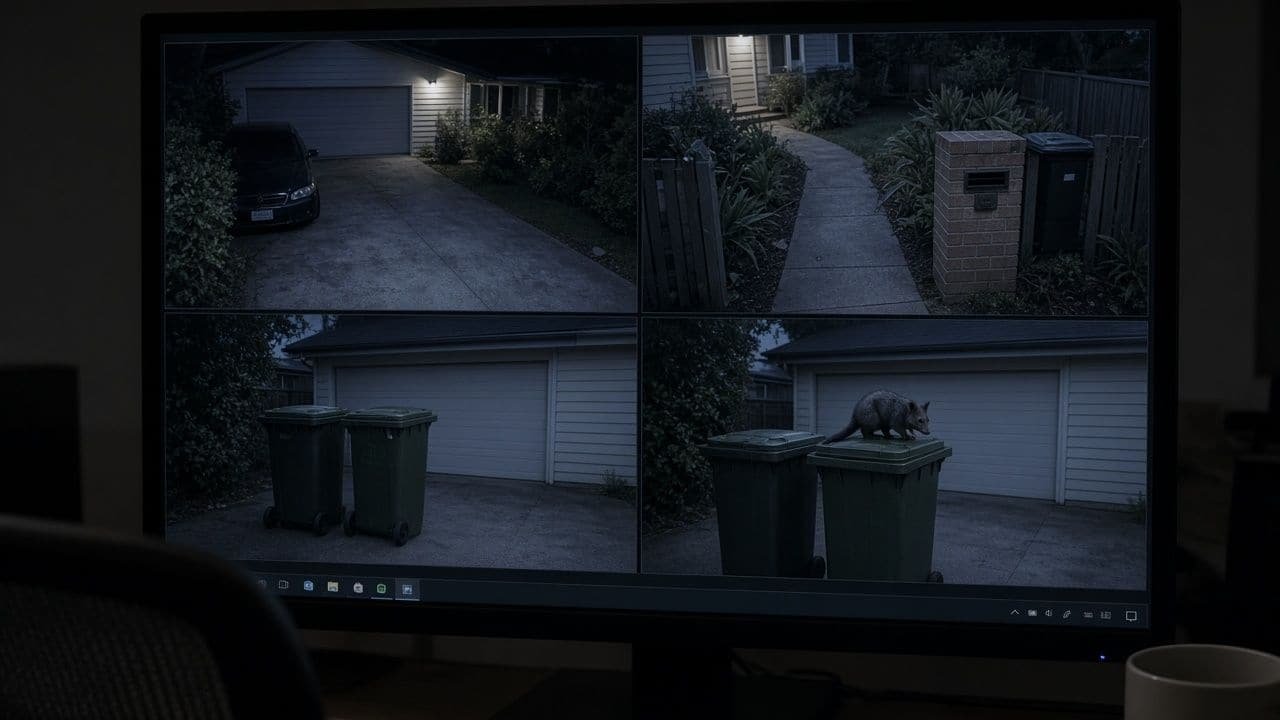
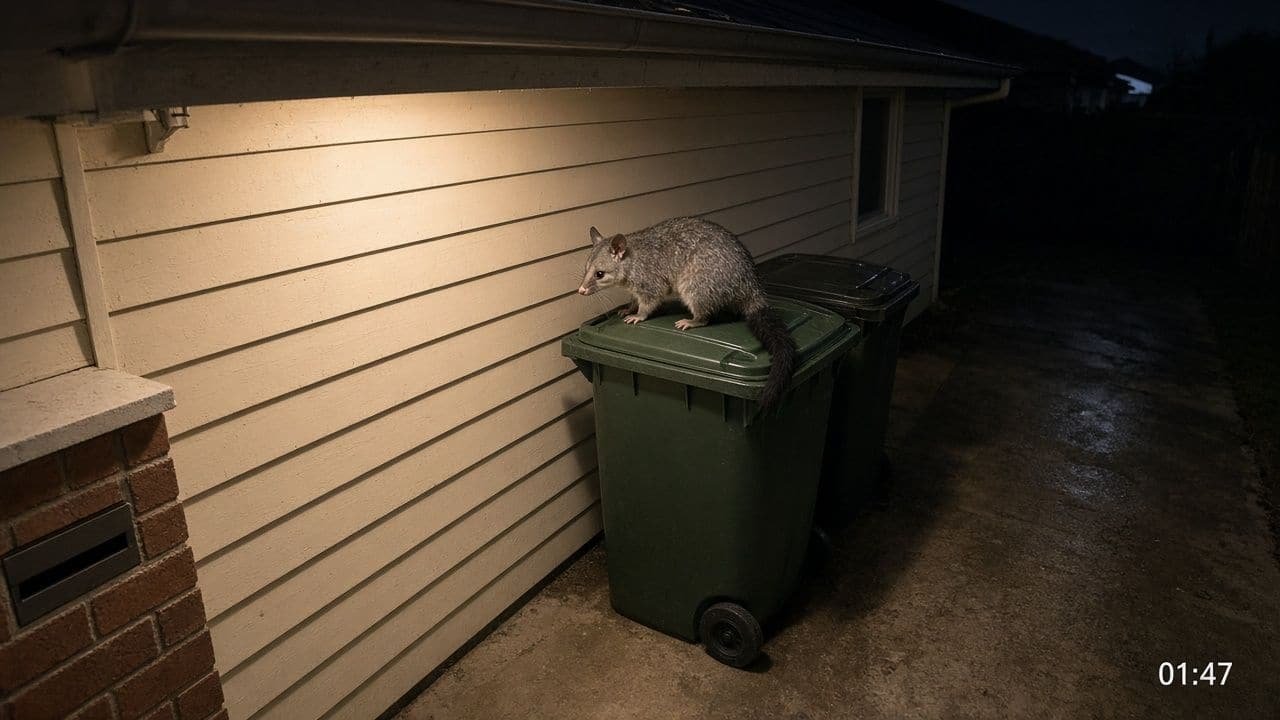
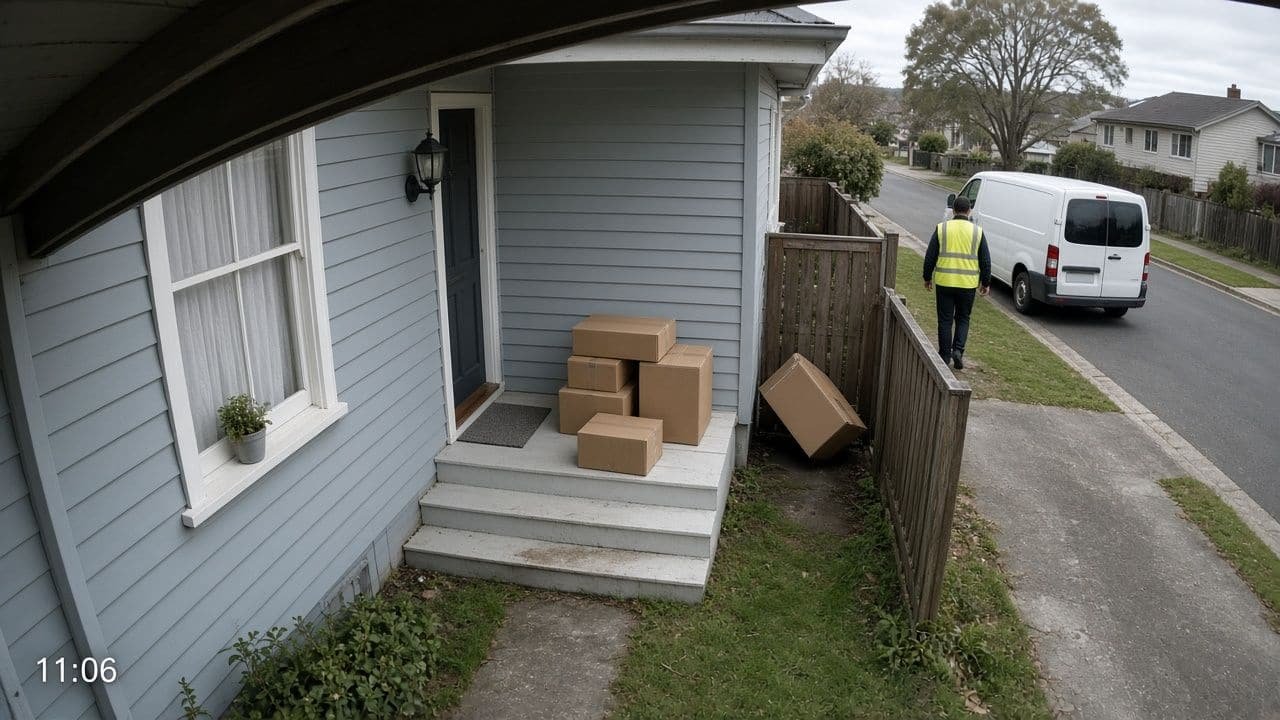
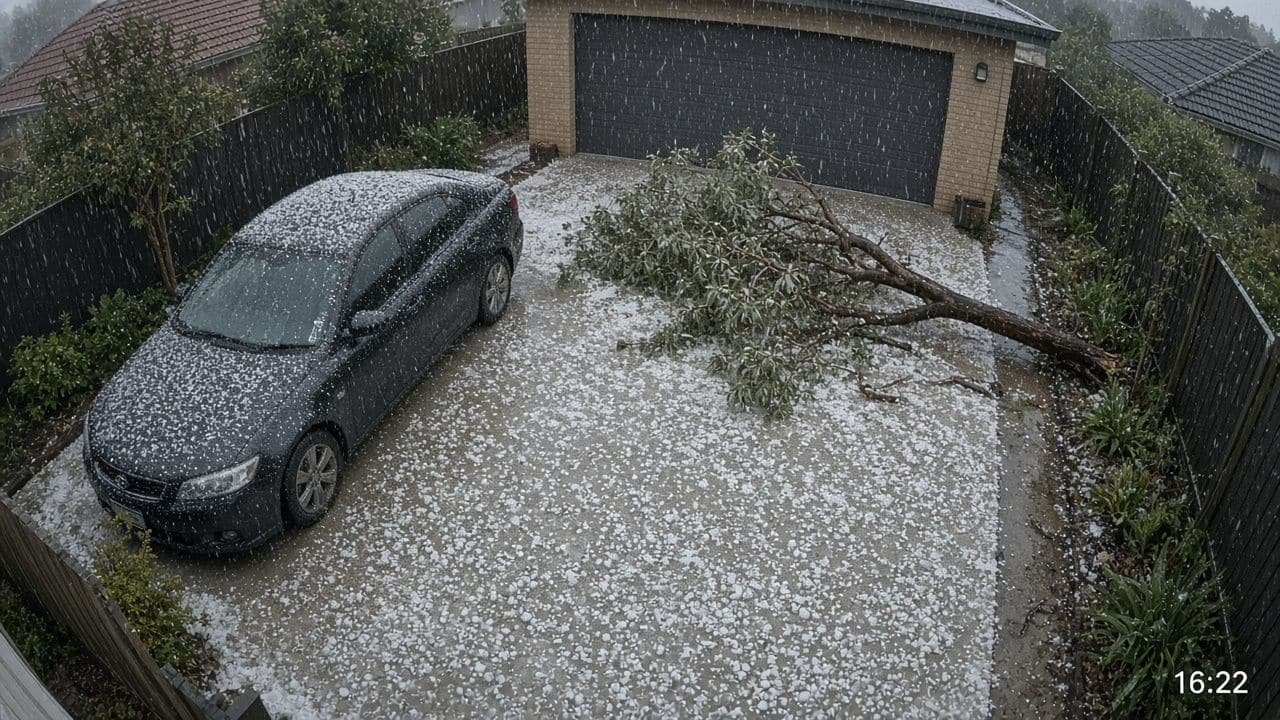
A camera on the front of an Australian house runs whether anyone is inside. Most of the year it films the same driveway, the same letterbox, the same wheelie bin. The clips people actually open again are the ones that were never the reason for the bracket: a possum on bin night, a parcel left where the rain will find it, hail on a car you cannot see from the kitchen.
Those clips are not a reason to collect oddities. They are a test of the camera. If the picture is sharp, the time on the file is right, and the animal or the courier is still in frame, the mount was worth doing. If the frame is black, cropped, or a grey blur, you only learn that something happened.
The yard after the lights go out
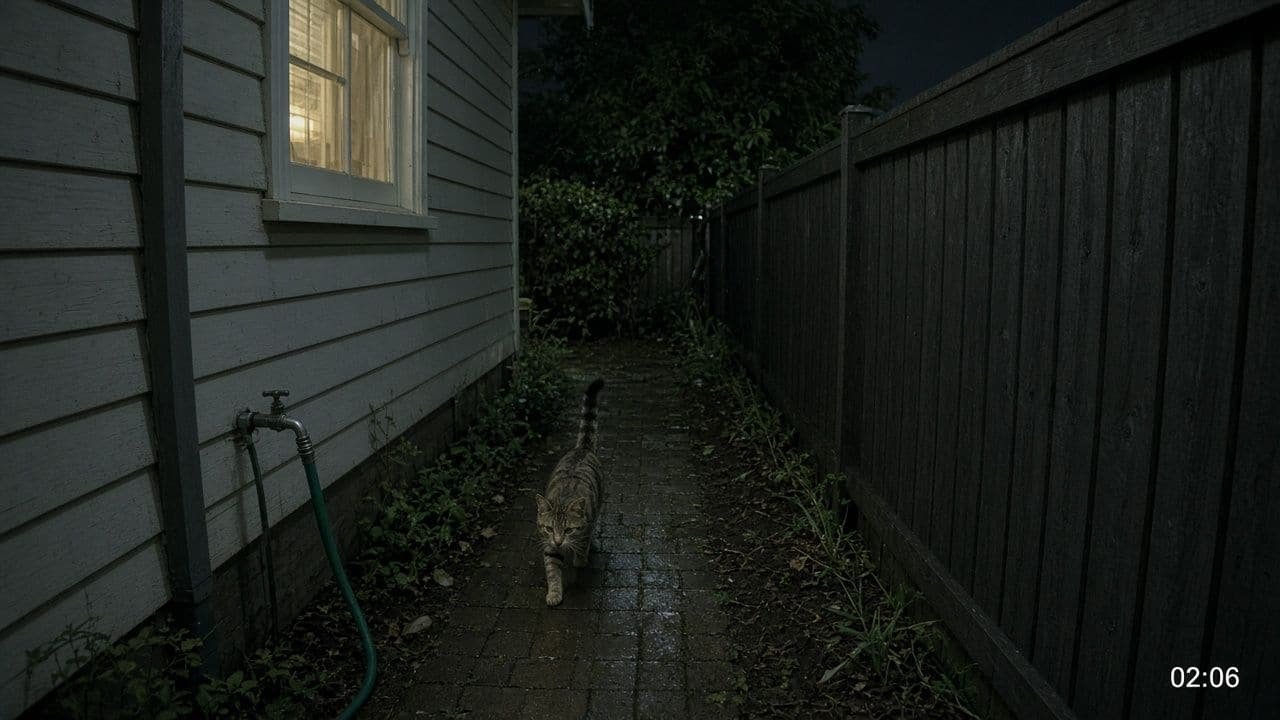
A camera on the eave becomes, without meaning to, a record of who uses the place when the house is quiet. A brush-tail on the bin the night before collection. A cat that has learned the side path. An ibis working the scraps by the garage. Infrared alone tells you a shape moved. Colour at night tells you what the shape was — fur, feathers, or a person who should not be on the drive.
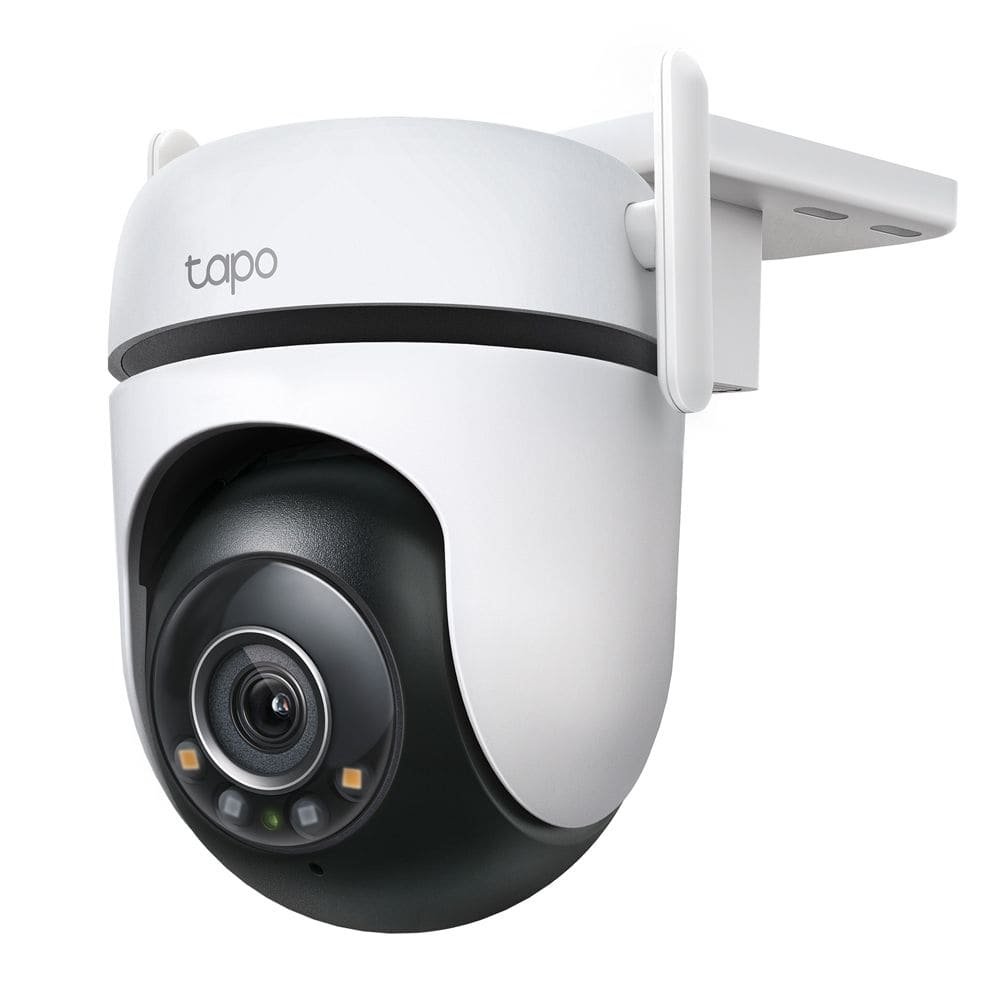
The Tapo C520WS in the catalogue is the outdoor camera stocked for that second version. Starlight colour night vision, a 2K picture (2560 × 1440), and a pan-and-tilt head so the yard is not one fixed rectangle. It also flags person, pet and vehicle, which is how a delivery van stays distinct from a branch in the wind. Tapo is the manufacturer. We sell the camera. We do not make it.
Parcels, and the place they should not be
A fixed view of the front door misses the courier who looks left, looks right, and leaves the box against the side gate because the step was full. You find it after the rain. A head that can pan across the path and the drive is the difference between “someone came” and “the box is by the meter box”. That is the job this camera is for: the front of the house, the driveway, the side path — not a single tile of the door.
Weather that does not book a time
The same patch of concrete is filmed in every season. That is how you see the driveway turn into a pond, hail on the bonnet, or a branch down before you walk out to the car. IP66 on the C520WS is the housing rating for rain and dust. It is not a promise about a cyclone, and it does not replace looking at the roof. It is the condition for the clip still existing when the weather is the story.
Power is the included 9 V adapter. This is not a battery camera, so mount it where that lead can reach — under an eave is the usual place. If the Wi-Fi at that corner of the house is weak, the camera has an Ethernet port. A dropped link is the same as no camera on the night you needed it.
What those clips are actually for
They do not prove you need a camera in order to collect strange footage. They prove you cannot predict the useful frame. When something happens at 2 am — a person, a pet, a car, or only a time you need to check later — you want detail, colour, and enough of the yard in view to see where it went.
- Picture — 2K on this model. Enough to tell a person from a pet at the end of a suburban drive. The number does not replace a mount that actually sees the drive.
- Night — starlight colour night vision, so the clip is not only a white shape in infrared.
- Angle — pan and tilt around the bracket. A driveway, a side path and a yard rarely sit inside one fixed shot.
- Record — a microSD card up to 512 GB (the card is not in the box) or Tapo Care if you want the maker’s cloud. A card in the camera stays in the house.
- Continuity — the weatherproof housing, the included adapter, and Ethernet if Wi-Fi drops out at the eave.
Point it at your own place
Mount it for the front of the house, the drive and the yard you occupy. A camera aimed into a neighbour’s windows, or left recording private conversations, is a different problem, and the rules differ by state. This note is not legal advice. If the view takes in more than your own land, shift the pan before you rely on the picture.
The outdoor camera in the shop is the Tapo C520WS. The price is on the card, in Australian dollars, GST included. Add it to the kit, enter an Australian address, and place the order. Freight is a flat charge per order, shown before you pay. If Tapo publishes a warranty, it stays with them. Returns, as seller, sit with us under the Australian Consumer Law. The rest of that bay is under cameras.